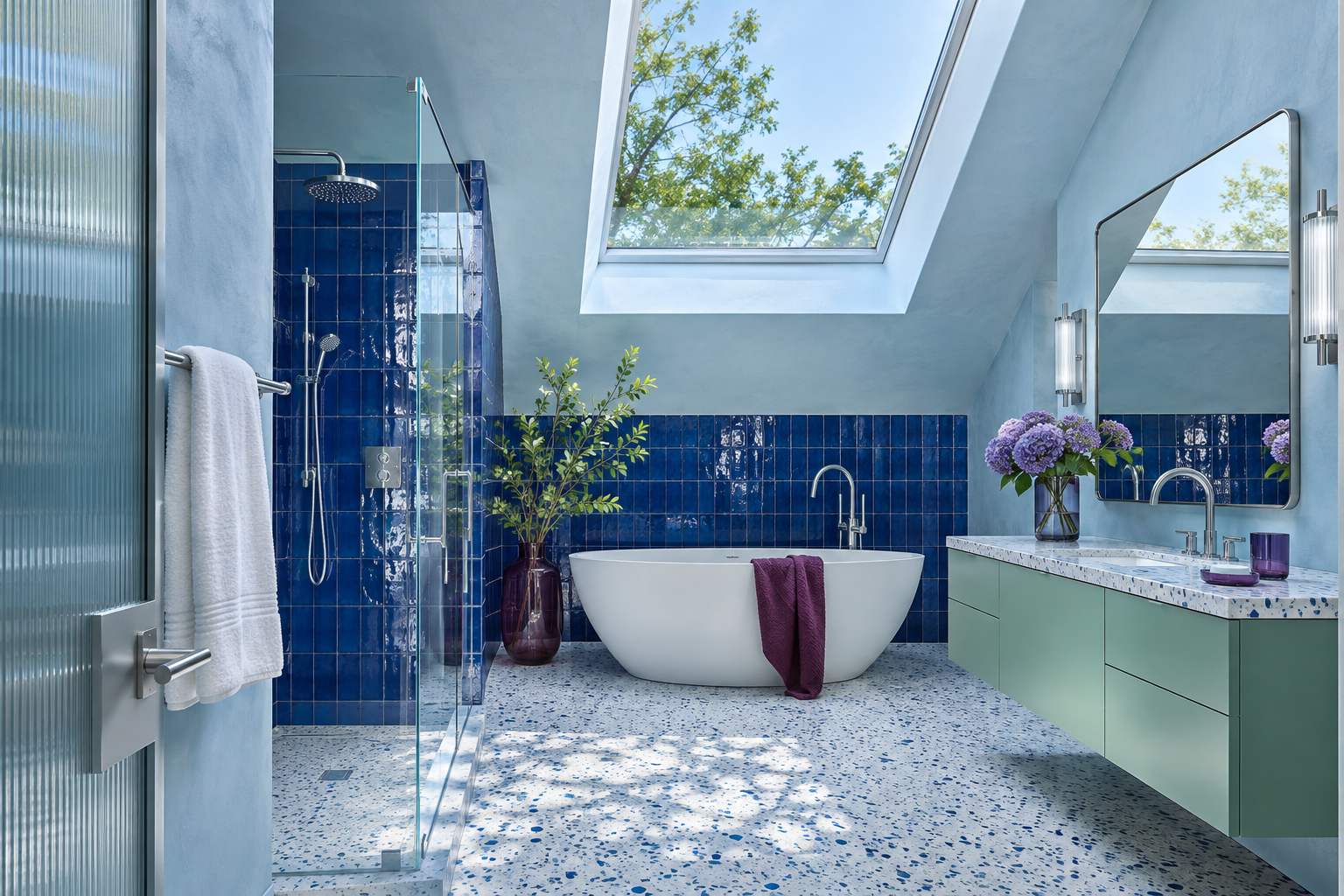
Use skylights, high windows, and reflective surfaces to make your bathroom brighter, calmer, and still private.
The best way to bring daylight into a bathroom is to place the light high, control the view, and plan the artificial lighting around it. For many homeowners, that combination creates a room that feels calmer and more useful without exposing the space to neighbors or making nighttime routines difficult. Recent bathroom design coverage supports that instinct: Houzz reports that natural light helps 40% of renovating homeowners unwind, and Architectural Digest and Western Living both show how thoughtful window placement can shape a bathroom without turning privacy into an afterthought.
Start with the privacy question, not the window question
Before deciding between a skylight, clerestory window, or a high shower window, ask one simple question: what part of the room needs daylight, and what part must stay visually protected? In a bathroom, the answer is rarely “everything.” The goal is usually to brighten the vanity, soften the shower, or bring a more open feeling to the room while keeping sightlines under control.
That is why privacy-first daylighting often works better than a standard low window. High placement can admit daylight while limiting views in from outside. A clerestory window can do the same along a wall where a lower window would feel too exposed. In some layouts, frosted or patterned glazing may be enough; in others, the glass itself can be placed where it catches light but not direct lines of sight. The right choice depends on the room’s orientation, nearby houses, and how the bathroom is used day to day.
Skylights are one of the cleanest ways to add daylight
A skylight is often the most privacy-friendly way to bring real daylight into a bathroom because it introduces light from above instead of from a neighboring view. That makes it especially useful over a vanity, in a shower, or above a tub where you want brightness but not exposure. Architectural Digest highlighted a Nashville primary bathroom reworked so the vanity sits under a skylight, a good example of how overhead daylight can become part of the daily routine rather than just an architectural feature.
The tradeoff is that skylights need careful detailing. They must be integrated with the roof structure, waterproofing, and insulation, and they should be placed with the room’s layout in mind so the light actually lands where you need it. A skylight centered in the wrong spot can create glare or leave the mirror too dark, while one aligned with the vanity can make the room feel naturally lit for much of the day. In practical terms, skylights work best when they are designed as part of the bathroom plan, not added at the end as an afterthought.
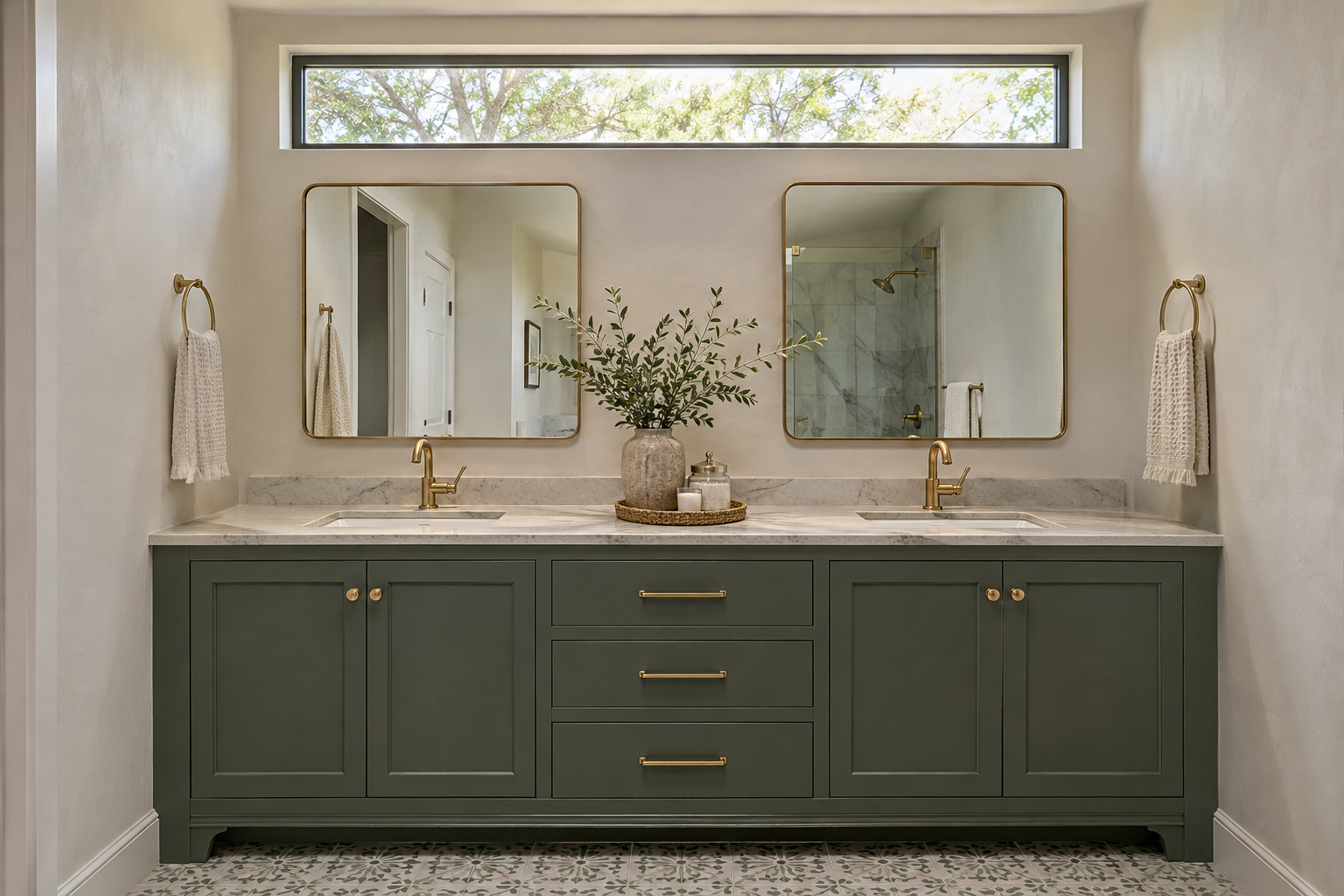
High windows can preserve privacy while still making the room feel open
Clerestory windows and other high windows are a strong option when you want side light but need to protect privacy. Because the glazing sits above eye level, it brings daylight into the room without making the shower or vanity visible from outside. That can be especially helpful in primary baths, guest baths, or homes with close neighboring properties.
Western Living shows how designers use window placement strategically in bathrooms, including expansive glazing paired with tall mirrors and other reflective elements. The general lesson is that even when the window itself is modest, placement can make the room feel larger and brighter. A high window can also work well in a shower if the opening is carefully positioned and detailed for water exposure. The main tradeoff is that you may gain less direct view connection to the outdoors than you would with a lower window, but in a bathroom, that is often the point.
Use mirrors and reflective surfaces to make daylight go further
Daylight in a bathroom is rarely just about adding more openings. It is also about helping the light travel. Mirrors, glossy tile, and glass can spread daylight deeper into the room and reduce the need for artificial lighting during the day. Western Living highlights the value of mirrors in reflecting natural light, and that strategy is especially useful when the room has only one daylight source.
A well-placed mirror can make a skylight or high window feel more powerful by bouncing light toward darker corners and across the vanity wall. The same is true of glass shower enclosures, which can allow light to pass through instead of stopping at a visual barrier. The downside is that too much reflectivity can start to feel busy or create glare, especially if the daylight is direct. In a remodel, the best result usually comes from balancing reflective surfaces with matte finishes that keep the room calm and comfortable.
Plan for night lighting from the beginning
A daylight-filled bathroom still needs a strong lighting plan after dark. Houzz reports that 39% of surveyed homeowners value dimmable lighting in bathroom renovations, which makes sense: a bathroom that feels airy by day should still work for early mornings, late nights, and grooming tasks when natural light is gone.
That means daylight and task lighting should be designed together. A skylight may reduce the need for overhead fixtures during the day, but the vanity still needs clear, shadow-free illumination at night. If the room depends too heavily on daylight, the bathroom can become frustrating once the sun goes down. Dimmable lighting, layered fixtures, and careful mirror placement help the space transition from bright daytime use to softer evening use without feeling harsh. The best bathroom lighting plans do not treat daylight as a substitute for electric light; they treat it as one layer of a more flexible system.
Choose glazing and placement based on how you actually use the room
The right bathroom daylight strategy depends on what matters most in that specific space. A primary bath with a large vanity may benefit from a skylight centered over the sink. A shower in a tightly bordered lot may do better with a high, narrow window or clerestory opening. A tub area may be suited to daylight from above, while a double vanity may need a wider wall treatment paired with mirrors to distribute light evenly.
The real design challenge is not just letting light in. It is deciding where privacy can be relaxed and where it cannot. That is why bathroom daylighting works best when it is tailored to the room’s layout, neighborhood context, and daily routine. Sometimes the right answer is a single skylight. Sometimes it is a combination of high glazing, privacy film, and mirrored surfaces. The common thread is control: the room should feel bright, calm, and open without giving up the comfort that makes a bathroom truly usable.
If you are planning a bathroom remodel in Franklin, Williamson County, or elsewhere in Middle Tennessee, Brick & Beam Homes can help you think through daylight, privacy, waterproofing, and lighting as one design problem instead of separate decisions. The right solution is rarely the most dramatic one; it is the one that fits your home, your lot, and the way you actually use the space. If you are ready to explore skylights, high windows, or other privacy-first options, contact Brick & Beam Homes to start the conversation.