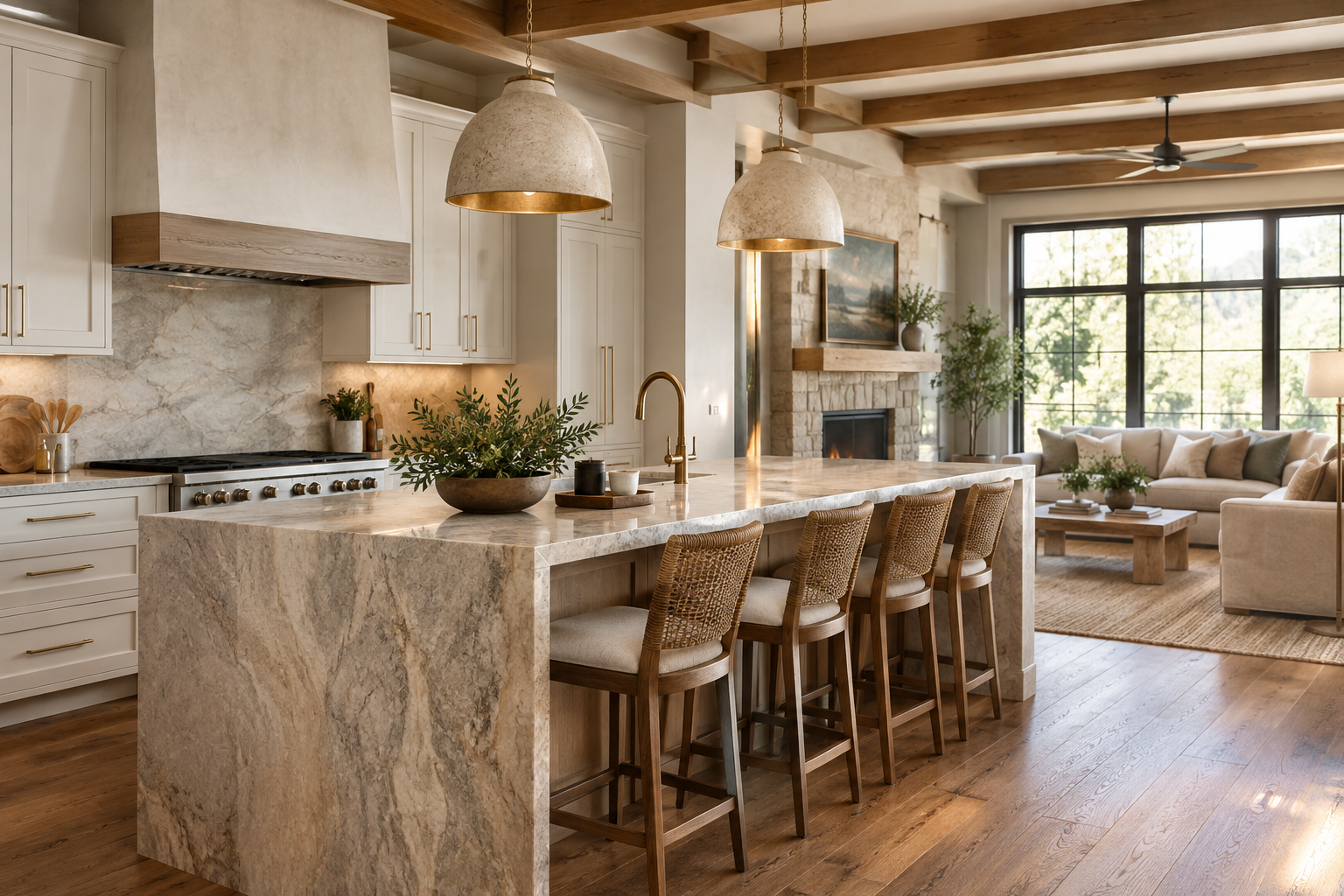
Natural materials, layered finishes, and smarter planning are making remodels feel warmer, more personal, and more durable.
If you want a remodel that feels current without feeling trendy, the clearest direction is this: lean into natural materials, thoughtful layering, and design choices that fit the way your household actually lives. The recent Houzz Fall 2026 Design Trends Report points to natural materials moving well beyond the usual places, with natural stone appearing in unexpected applications such as sinks, furniture, and lighting. It also reflects a broader shift toward warm palettes, personalized details, and aging-in-place features. For homeowners across Middle Tennessee, that combination makes practical sense. The goal is not to chase every new idea, but to build spaces that feel calm, usable, and durable for years to come.
1. Start with materials that add warmth and stay relevant
One of the most useful design lessons in the Houzz report is that natural materials are no longer limited to obvious roles like wood cabinetry or stone countertops. Natural stone is being used in more unexpected ways, including sinks, furniture, and lighting. That matters because materials do more than cover surfaces; they shape the character of a room. When a remodel uses materials with real texture and variation, the space often feels more grounded and less disposable.
For homeowners, the practical question is not whether natural materials are “in.” It is where they will work best. In a primary bath, a stone sink can create a strong focal point, but it may also require more care than a standard surface. In a kitchen, natural stone on an island or backsplash can add depth, though the finish and maintenance expectations should be part of the planning from the start. The best results come when material choices are matched to how the room will be used every day.
2. Use warm palettes and layered finishes to make rooms feel finished
KBB’s summary of the Houzz trend report points to warm palettes and layered finishes as part of the current direction in home design. That does not mean every room needs to be beige or muted. It does mean many homeowners are moving away from hard, high-contrast combinations that can make a space feel stark. Warmth can come from wood tones, softer paint colors, brushed metals, and stone with subtle variation.
Layering is especially helpful in remodels because it gives a space visual depth without requiring a major structural change. A kitchen can feel more complete when the cabinet color, countertop, hardware, and lighting are chosen as a coordinated set rather than as isolated decisions. The same is true in a bathroom: tile, vanity finish, mirror style, and fixtures all affect how polished the room feels. There is a tradeoff, though. More layers can mean more decisions, and too many competing finishes can make a room feel busy. A good design-build process helps narrow the options so the final result feels intentional, not overworked.
3. Personalization should solve real problems, not just add style
Personalized details are part of the trend conversation, but personalization works best when it serves the household. That might mean a pantry layout built around how your family shops, a mudroom that handles backpacks and sports gear, or a primary bath that includes better storage and lighting for daily routines. These are not flashy upgrades, but they are the features that often make a remodel feel successful long after the first reveal.
In practice, the most effective personalization happens early. Before anyone picks finishes, it helps to map how the room needs to function. Where do you set things down? Which drawers need to hold small items? Do you need seating, charging space, task lighting, or better sightlines? Once those questions are answered, the decorative choices can reinforce the plan. The tradeoff is that highly personalized features may appeal less to a future buyer than broadly neutral ones. That is why the smartest remodels balance individual needs with choices that still feel flexible and timeless.
4. Aging-in-place features can improve comfort at any stage of life
KBB’s summary also notes aging-in-place features as part of the broader trend picture. For many homeowners, that phrase can sound like something reserved for later years, but the underlying idea is simple: make the home easier and safer to use. That can include better lighting, fewer awkward transitions, improved shower access, stronger circulation paths, or storage placed where it is easy to reach.
These upgrades are often more attractive when they are integrated rather than added as obvious afterthoughts. For example, a curbless shower can feel sleek and modern while also reducing a barrier in daily use. Wider walkways can make a kitchen more comfortable for multiple people without changing the room’s style. Lever handles, well-placed task lighting, and thoughtful contrast between surfaces can also improve usability. The important tradeoff is that some accessibility-minded choices may require more upfront planning during the design phase. But addressing them early usually produces a better-looking and more functional result than trying to retrofit later.
5. The best remodels balance trend awareness with long-term fit
Trend reports are useful because they show where design is heading, but they should not be used as a checklist. A remodel lasts longer than a design cycle, so the most successful projects filter trends through the realities of the home, the budget, and the way the household lives. A material that looks beautiful in one room may not be the right choice in another. A feature that feels bold today may feel distracting if it is used everywhere.
That is why the design-build approach is valuable for homeowners planning a kitchen, bathroom, or whole-home remodel. It gives the team a chance to compare options, talk through maintenance, and identify where a trend adds value versus where it may create unnecessary complexity. Natural stone, warm finishes, and personalized layouts can all be excellent choices when they are placed with purpose. The same is true for aging-in-place elements: if they are woven into the design from the start, they can improve daily life without compromising the look of the home.
If you are considering a remodel in Franklin or elsewhere in Middle Tennessee, the goal is not to copy a trend report room by room. It is to build a home that feels warm, practical, and tailored to how you live now and in the years ahead. Natural materials, layered finishes, personalized details, and thoughtful accessibility features can all contribute to that outcome when they are planned carefully. Brick & Beam Homes helps homeowners turn those ideas into well-built spaces that feel cohesive from the first design conversation to the final finish. If you are ready to explore what makes sense for your home, contact Brick & Beam Homes to start the conversation.