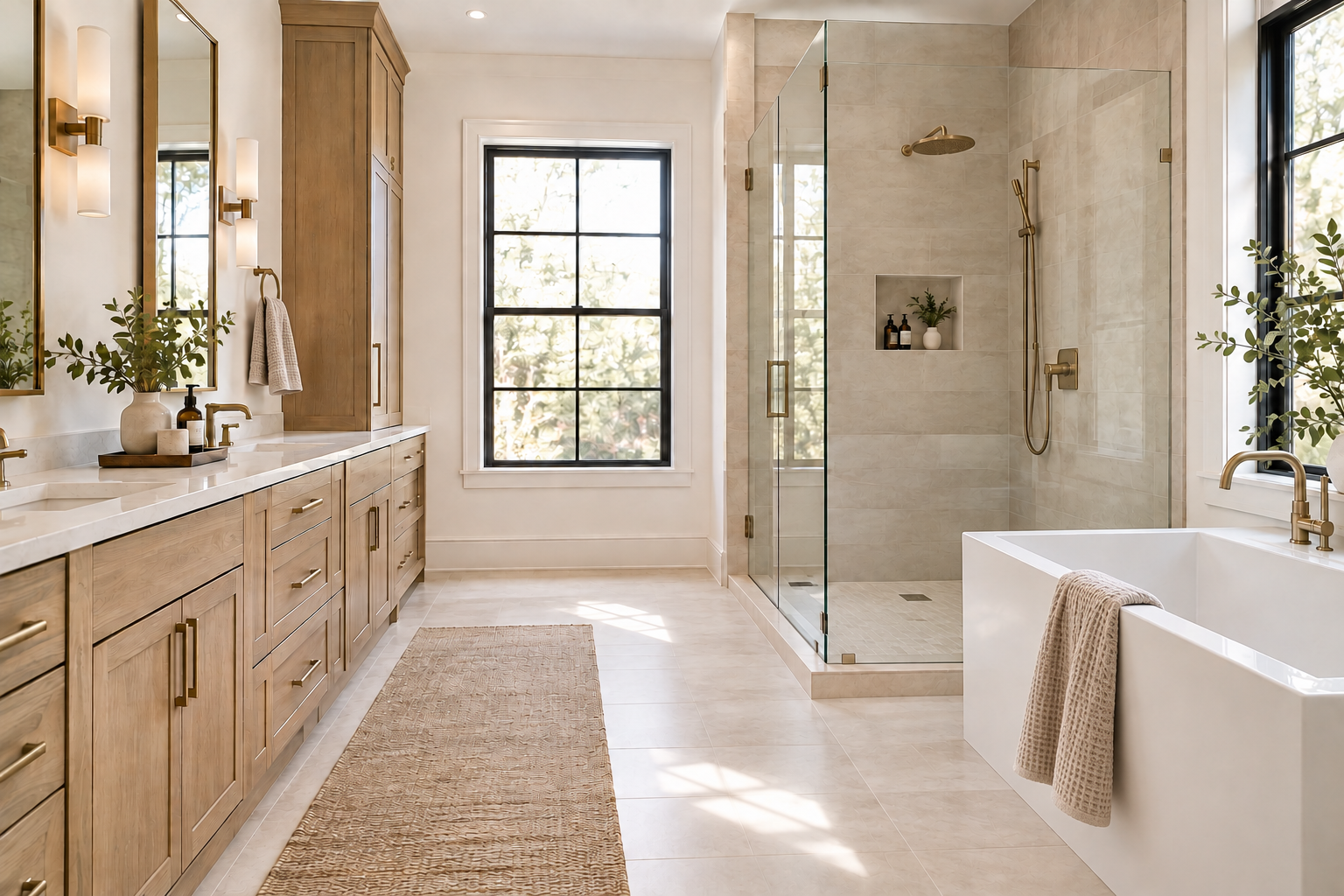
Luxury feels better when a bathroom stays clean, organized, and easy to maintain every day.
The most relaxing bathroom is usually not the one with the most features; it is the one that stays clean with less effort. That is the clearest takeaway from the latest Houzz bathroom trends coverage cited by Kitchen & Bath Business, which reports that 76% of surveyed homeowners identified cleanliness as the most relaxing feature in a renovated bathroom, ahead of a spacious shower and organized storage. For homeowners in Franklin, Williamson County, and across Middle Tennessee, that makes cleanability a smart design priority, not an afterthought. A bathroom can still feel elevated and personal, but the best version is one that supports daily routines, reduces visual clutter, and is simple to maintain over time.
Start with surfaces that do not create constant upkeep
When people imagine a premium bathroom, they often picture bold tile, heavy glass, statement stone, or a dramatic soaking tub. Those elements can absolutely work, but they should be selected with maintenance in mind. A surface that looks beautiful on day one but shows every water spot, soap trace, or grout line can become tiring fast.
A cleanable bathroom usually relies on fewer interruptions across major surfaces. That can mean simpler wall and floor transitions, more continuous materials, and details that do not catch dust or moisture. The goal is not to strip away character. It is to reduce the places where grime naturally collects, especially around edges, seams, and hardware. In practical terms, that may mean choosing finishes that are easier to wipe down, limiting overly fussy trim profiles, and thinking carefully about where water will actually land during everyday use.
Choose storage that keeps counters clear without feeling bulky
The same Houzz trends coverage notes that organized storage is one of the top relaxing features in a renovated bathroom. That makes sense: a bathroom feels calmer when daily items have a place to go. Clear counters read as cleaner, and cleaner counters usually feel more peaceful.
The tradeoff is that storage has to be planned, not just added wherever space remains. Deep drawers often work better than narrow cabinets for products used every day. Recessed or built-in storage can preserve floor space and keep the room feeling open. Medicine cabinets, linen storage, and carefully placed vanity compartments can also help, as long as they are sized for the household’s real habits. A beautiful bathroom becomes much more livable when the things you use most often are easy to reach but not always visible.
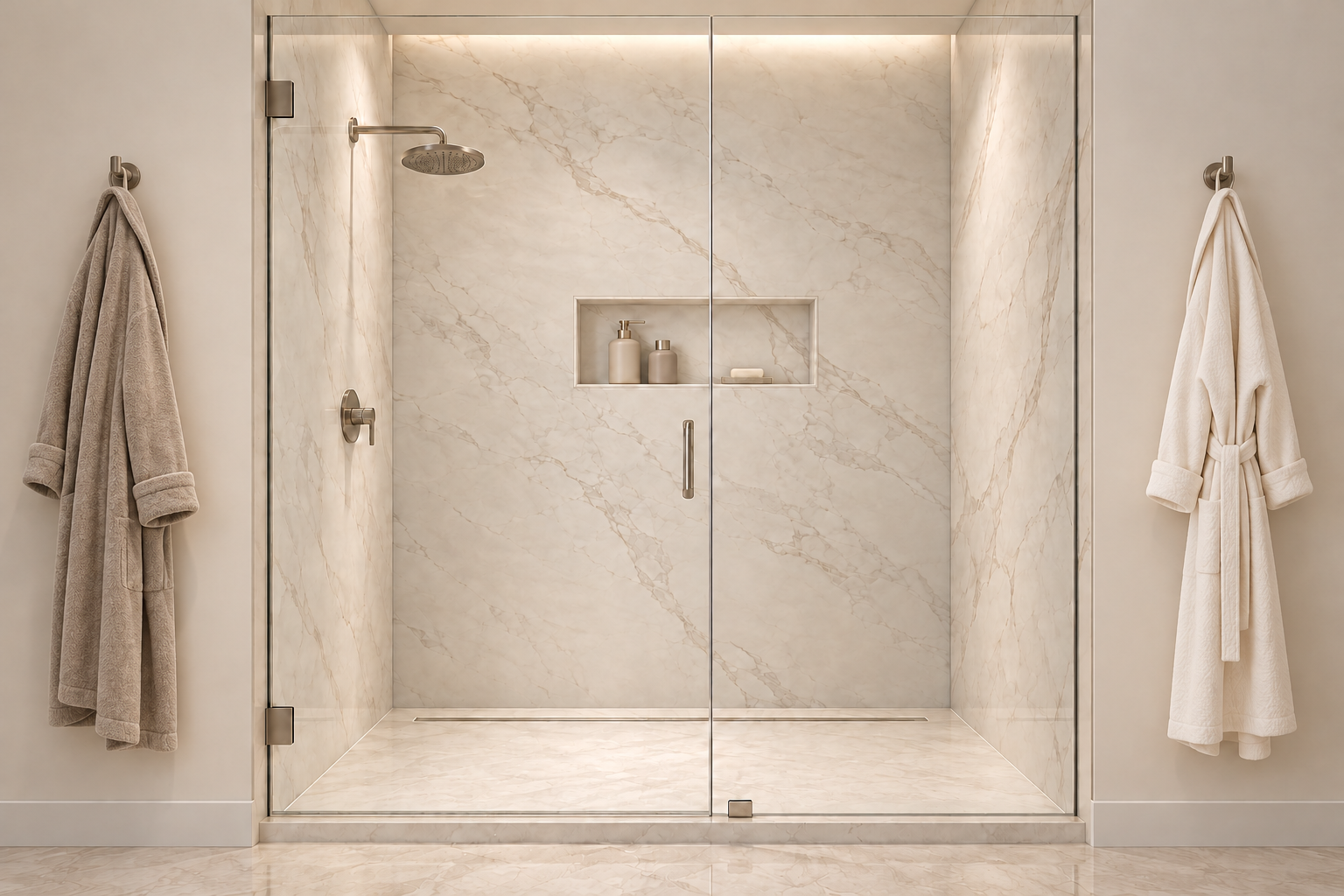
Ventilation matters more than many design choices homeowners notice at first
A bathroom that is easy to clean usually starts with moisture control. Even the best-looking materials will age poorly if humidity lingers after showers and daily use. Good ventilation helps protect paint, mirrors, woodwork, grout, and hardware, while also reducing the conditions that make a bathroom feel stuffy or damp.
This is one of those design decisions that does not always get attention in the inspiration phase, but it has an outsized effect over time. If ventilation is undersized, noisy, poorly located, or inconvenient to use, the room can become harder to maintain no matter how carefully it was finished. Homeowners should think beyond appearance and ask how the room will dry, how air will move, and how the ventilation plan fits the size and layout of the space. A relaxing bathroom is one that recovers quickly after use.
Make fixtures and shower details serviceable, not just stylish
Luxury bathrooms often include larger showers, floating vanities, wall-mounted faucets, or other visually clean details. Those choices can support a more refined look, but only if they are practical to use and maintain. A floating vanity, for example, can make floor cleaning easier, but it also changes storage capacity and may require more careful planning for plumbing and support. A large glass shower can feel open and spa-like, but it also means more glass to wipe and more surfaces exposed to daily moisture.
The best approach is to think through maintenance before finalizing the design. Can the shower be reached easily for cleaning? Are the fixtures accessible if they need service? Are drains, niches, and edges designed to avoid awkward buildup points? Are the materials forgiving enough for real family use? These are not glamorous questions, but they are the ones that determine whether the room keeps its polish after the renovation dust settles.
Design the room for real routines, not just the first week after completion
The same Houzz study coverage cited by Kitchen & Bath Business reports that 50% of renovating homeowners spend more time in their bathroom after an upgrade, often for beauty and pampering routines and rest or relaxation. That is important because it shows how the bathroom is being used today: not only for quick in-and-out utility, but as a place for slower routines and personal reset.
That shift has design implications. If a bathroom is meant to support more time spent inside it, then the layout should feel intuitive and the upkeep should not become a burden. Good task lighting helps with grooming. Thoughtful storage keeps routines orderly. Durable finishes make it easier to enjoy the room without worrying about every splash or fingerprint. In other words, the more the bathroom serves as a daily retreat, the more important it is that the space can stay clean with minimal effort.
Balance visual warmth with practical restraint
A cleanable bathroom does not have to look plain. In fact, many of the most elegant bathrooms are restrained rather than overloaded. Warm finishes, layered lighting, quality hardware, and well-chosen textures can create depth without making the room difficult to care for. The key is to distinguish between details that add comfort and details that add maintenance.
For example, a carefully chosen natural-looking palette can feel calm and high-end while still being easier to live with than a room full of small-format surfaces and ornate features. Likewise, one or two strong design moments often age better than many competing accents. Homeowners in Franklin and throughout Middle Tennessee often want a bathroom that feels tailored to their home, but the most successful projects tend to be the ones where style and upkeep support each other rather than compete.
If you are planning a bathroom remodel, it is worth treating cleanability as part of the luxury brief. Cleanliness, organized storage, good ventilation, and serviceable fixtures all contribute to a room that feels more relaxing day after day. Brick & Beam Homes helps homeowners in Franklin, Williamson County, and Middle Tennessee design bathrooms that are beautiful, practical, and easier to maintain over time. If you are ready to think through what that could look like in your home, contact Brick & Beam Homes to start the conversation.